What We Accumulate

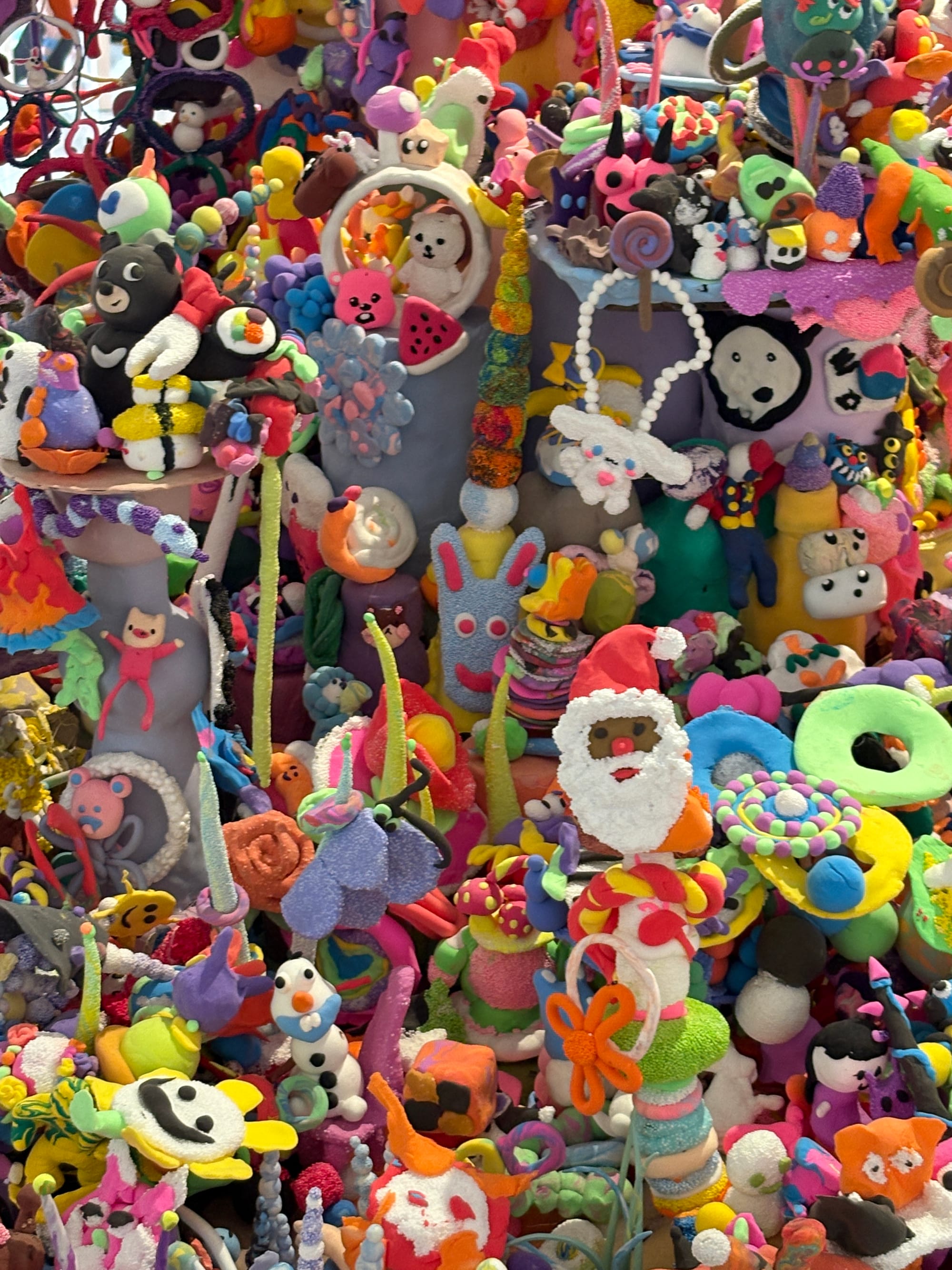
I had the good fortune to recently visit the Auckland Art Gallery, the leading museum of Contemporary Art in New Zealand. It wasn't a planned stop on our trip to Oceania, but a little girl in cherry colored rain boots at the Albert Park befriended my child and invited us to her favorite place in the city. And when you are on what might be a once in a lifetime trip, one that you have dreamed about for decades, you listen to the little ones.
This detour led us to a free exhibit called Artland: An Installation by Do Ho Suh and children, a collaborative hands-on work designed by artist Do Ho Suh with his young daughters (pictured above). The Suh family created a few small clay mythical creatures and have invited guests of the Auckland Art Gallery over the next year to cover the entire room, floor to ceiling, with their own clay creations to build a cumulative sculpture.
As you enter the gallery, you are given a recycled plastic gelato container filled with three tiny balls of what seemed like Model Magic, each one a different color. You don't choose the colors; they choose you. And you can mold whatever you wish - a flower, a unicorn, a monster, etc. You can create an individual free standing piece or extend the work of those who came before you.
But, as I reminded my child, you cannot keep what you have made.
You must leave it behind for others to enjoy, to build upon, or maybe to destroy.
The cumulative effect, as seen in the photos below, is beautiful and humbling.
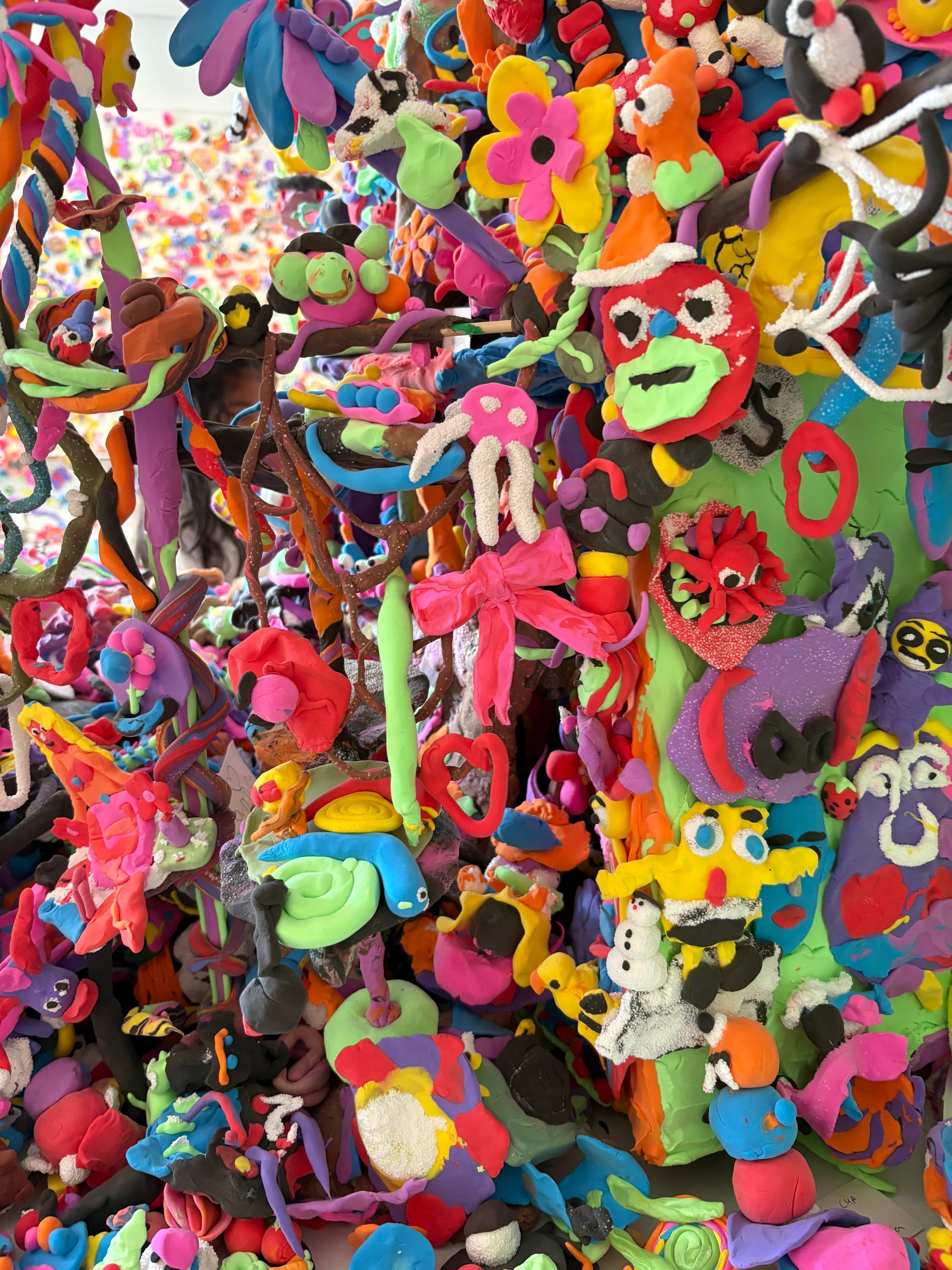
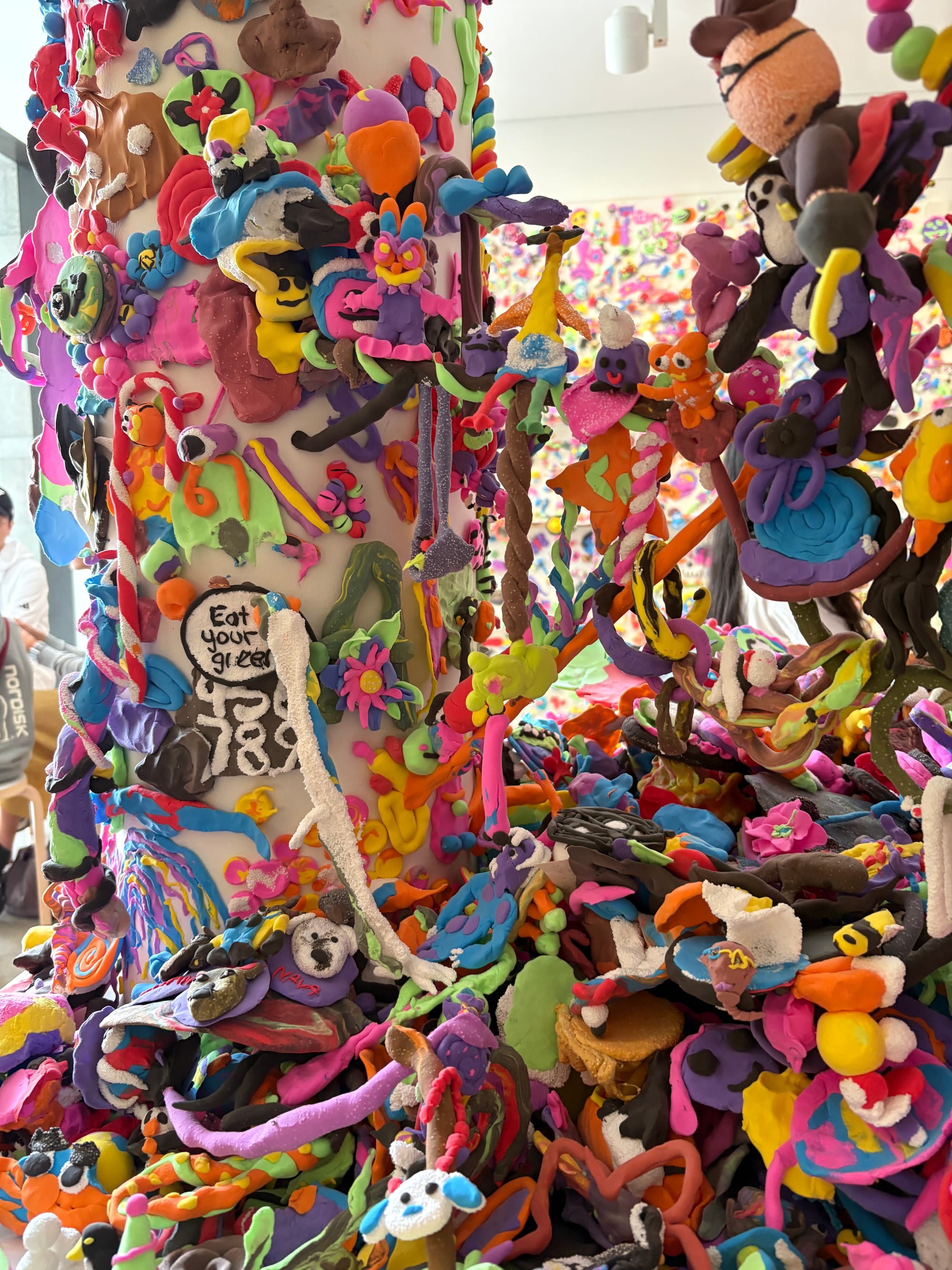
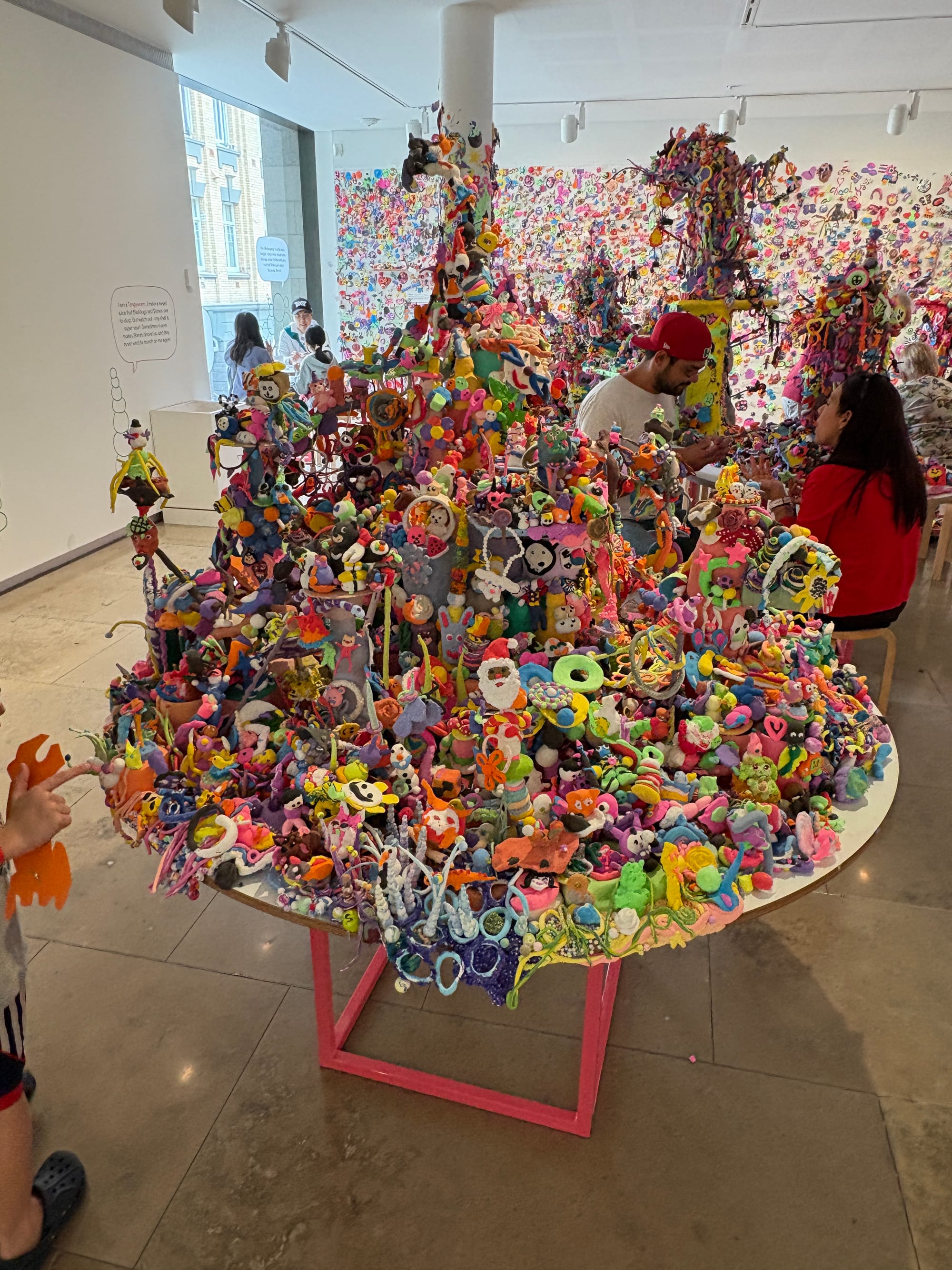
It’s an allegory for all the work that we do, as artists, but more importantly as humans.
It begs us to ask, what will you make from your clay? What will you leave behind?
The exhibit closes in July, so there is still plenty of time to fill the room. But by August, it will be packed up. Parts might be recycled. Some might be archived. It's a tremendous collaborative ongoing work that culminates in just one glorious moment.
When I reflect on my own career as a writer, particularly one who came of age on the cusp of the digital turn, my accumulations are less visual.
Much of the work I have written over the past 25 years, Op-Eds, magazine articles, peer reviewed articles, social media posts, poems, unpublished manuscripts on GoogleDocs, are composed on digital platforms whose links rot quicker than paper.
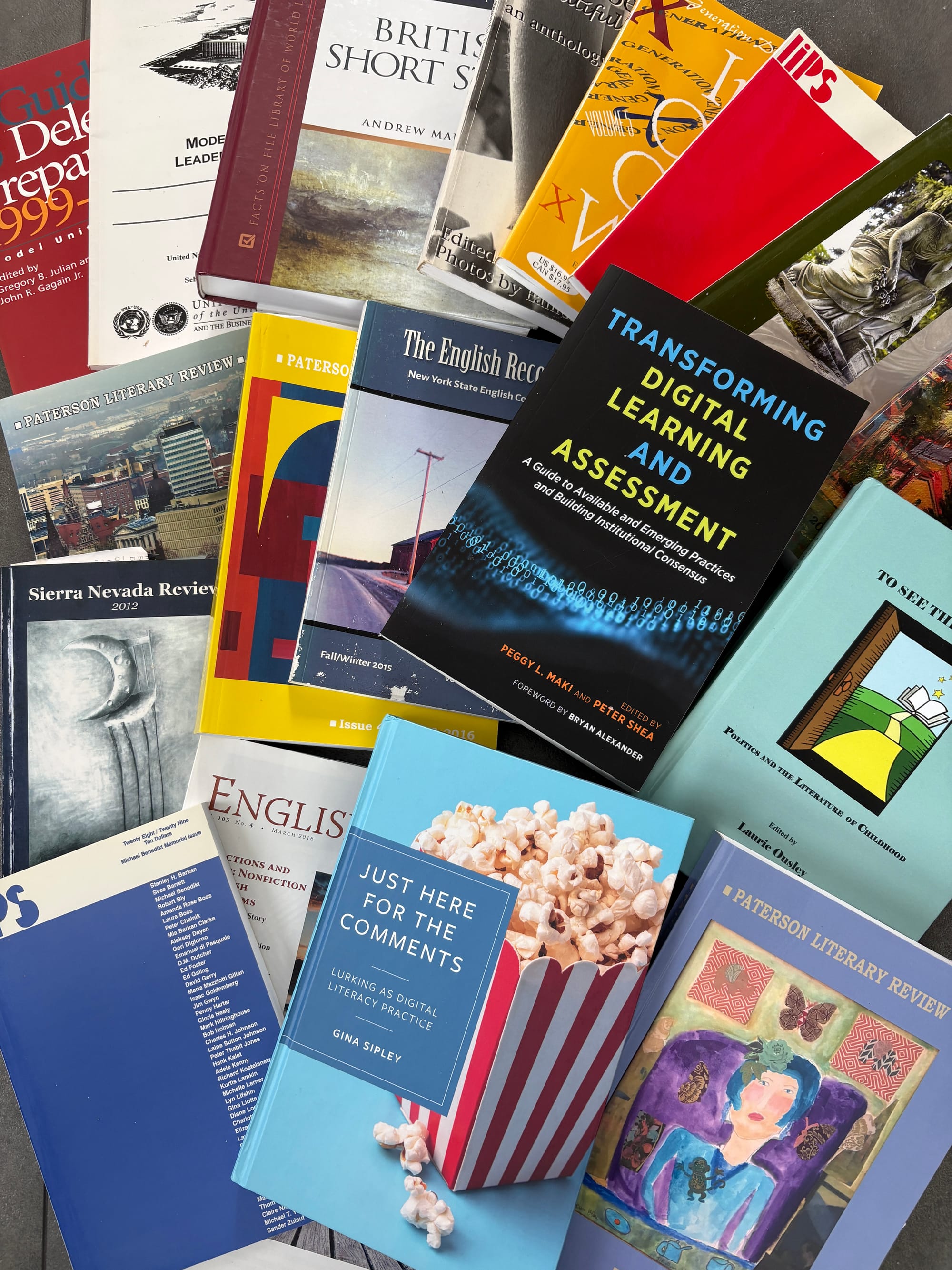
The picture below is a pile of the work I published in print -book chapters, poems, articles, one full length book- most of which occurred before the omnipresence of digital publishing. It's an impressive lot, but I'm still molding my clay.
The work we do as teachers is more difficult to quantitatively visualize. Sure, you can list the graduation outcomes, or the salaries attained by graduates, but the indelible marks, both good and bad, are not readily apparent.
The work we do as humans can be equally fraught. I once attended a lecture by my colleague, Richard Jeffrey Newman, who read some of his poetry and explained that 1:6 men in the U.S. report that they have experienced sexual abuse. We know that this kind of abuse is under reported, but if you take that number as a baseline and project it onto say the demographics of all of our world leaders, most of whom are men, the projected number of people in power who might have experienced abuse is astounding.
We are only given just this little pile of clay.
What do we build with it? Who builds from what we have made?
These are the questions I mediate on as I head into the New Year.
For now, I am living my resolution to invest in the writing projects that are most meaningful to me: revising my miscarried memoir into an essay collection, gathering data for future peer reviewed research on AI and companionship, continuing to seek publication for my poetry manuscript.
I have read so many good books. I look forward to sharing them with you next month.
Thanks for walking beside me,
If you know someone who might be interested in receiving this newsletter, please forward and encourage them to subscribe.